Pump storage … the industrial wind side show’s latest prop.

A November 7 article in the State Journal (West Virginia) is titled “Wind Power and Pumped Hydro Storage: A Natural Pair.”  What may seem very promising on the surface requires a bit of understanding, so before I comment, I’d like to provide this video of the Bath County Virginia pump storage facility for your review.

Impressive, don’t you think?  On-demand electricity from water power.  Ready to take care of the peak demand times as an “on call” resource to supplement fossil or nuclear stations.

(Full disclosure – I worked for a company which manufactures the major components for hydroelectric dams, including major pump storage systems.  I’m a huge fan of pump storage when used in the right application … supporting true electricity generators.)

Anyway, one thing the video mentioned that might have caught your ear was the fact that the water falling some 1,000 feet to generate electricity must be moved back up 1,000 feet to “reload” the upper reservoir.  The turbines which generated electricity as the water fell are reversed, now requiring electricity to turn the turbines into pumps.  This electricity must obviously come from something other than the pump storage facility.  The wind?

The article would like you to believe that.  The article quotes Mr. Matthew Shapiro of Gridflex, the Idaho company which is considering building a pump storage facility near the Mt. Storm wind facility in West Virginia, as saying, “So with that model (which pairs wind and pumped storage) we can compete directly against (natural gas combined cycle) as a product — and then also have all of the environmental benefits of it being wind versus a gas project.”  Really???  No natural gas support?  Just pump storage and wind turbines?

Nonsense!  This suggestion is beyond ludicrous and horribly misleading.  I can only assume Mr. Shapiro was misquoted in the article or I misunderstood his statement.  Would he have us believe that the combination of an industrial wind facility and a pump storage facility would only feed electricity into the grid and not require use of any of the electricity generated by natural gas or other fossil fuel?  Just curious, but what mysterious force comes into play when no wind blows … by what miracle does the water drift back uphill?

Pump storage facilities have worked for years in tandem with large coal and nuclear generating stations.  Large coal and nuclear station production is not easily modified to meet peak demand.  Pump storage has proven an effective partner over many years assisting these reliable generators to meet customer’s needs.

Maybe Mr. Shapiro really meant to say that pump storage and natural gas generators can assist industrial wind’s pitiful and unreliable performance.  But then you must ask why … why do we bother?  Why do we keep pretending that, with just a few more taxpayer dollars, a little more time, a few more regulations inhibiting competition and a few more quotas demanding its use, the inefficient, unreliable and heavily subsidized industrial wind profit centers have a place in our energy future?  Why do we continue to spend fortunes we don’t have on a product which gives back so little?

If Mr. Shapiro would like to build a pump storage facility to augment the existing grid, all power to him.  Mr. Shapiro did mention that “one incentive for a utility is that pumped storage counts toward the state’s requirement that utilities must get 10 percent of their electricity from alternative and renewable energy sources by 2015.”  But couldn’t he do that without wrapping the wind albatross around his neck?  Maybe he needs the poor performing contraptions to justify his entry?  I don’t know.

To me, any suggestion that that combining wind and pump storage will reduce fossil fuel usage is simply silly.  Pump storage has a proven role in the network of real, on-demand electricity generation supporting coal and nuclear.  Coming on line at peak demand is a means of helping fossil plants run more efficiently, so it seems to me that pump storage is already doing it’s part to reduce emissions.

Industrial wind, on the other hand, has proven to be a parasite, requiring prop after prop to keep it on life support.  And after all the thousands of turbines filling our landscape and emptying our bank accounts, there is no proof that one coal plant has been shut down as a direct result of industrial wind.

And sadly, rather than fund the research and development of serious future energy sources to replace fossil fuels, our leaders instead divert our valuable financial resources to the developer’s pockets.

I am a fan of pump storage in its role to support tried and true energy generators.  But I’m afraid all Mr. Shapiro is planning to bring to Mt. Storm is a crutch.

(Courtesy of Windtoons)

For a better understanding of industrial wind I suggest you take the time to read these two earlier posts:  A Conversation with Jon Boone – Toward a Better Understanding of Industrial Wind Technology and A Conversation with Jon Boone – Industrial Wind and the Environment

We also ask that you review the many links and other commentary provided here.

Posted in Allegheny Mountains, industrial wind failure, Windtoons | Tagged , , , , , | 11 Comments

John Terry on industrial wind: “one wonders what unintended consequence will occur next?”

The Cumberland (Maryland) Times-News recently published a commentary written by Mr. John Terry of Montrose, WV.  We thank Mr. Terry for permission to post this enhanced version of the original article.

AT Notes:  Please use the features of the Scribd embed tool to enlarge the article to full screen, download or print.  Please freely share this post with others.

Also, please visit Mr. Terry’s excellent site – Windtoons and take the time to read his earlier excellent post at Allegheny Treasures,  “Letter From Your Country Cousin.”

VA Wind is following the massive bird kill at the AES Laurel Mountain.  Please visit their excellent site regularly for more information on this, and other industrial wind issues.

Posted in Allegheny Front Alliance, Allegheny Mountains, Archives, Environment, USFWS Guidelines, West Virginia Wind, Windtoons | Tagged , , , , , , , , | Leave a comment

Secretary Salazar challenged on industrial wind support.

West Virginia Physician Dr. Wayne Spiggle recently received an email from Secretary of the Interior Ken Salazar in which the Secretary announced that the Department of the Interior will issue a 50-state report outlining the country’s most promising ways to reconnect Americans with the natural world.  The email noted two projects in West Virginia that will be included in the final report (specifically, landscape conservation in the Canaan Valley and a partnership with the Boy Scouts to improve trails and other recreational facilities in the New River Gorge) each said to represent what the State of West Virginia and local stakeholders believe are among the best investments to support a healthy, active population, conserve wildlife and working lands, and create travel, tourism and outdoor recreation jobs across the country.

Taking advantage of Secretary Salazar’s suggestion that the Interior Department listens to the people of West Virginia and communities across America, Dr. Spiggle offers his thoughts in this open letter to the Secretary:

An open letter to Sec. Salazar, 10/26/11

To the Office of Secretary Salazar, U.S. Department of the Interior:

I just read with great satisfaction Secretary Salazar’s announcement of his plan to promote outdoor recreation and conservation in WV.  During my last three years of high school I grew up in Canaan Valley.  Later, I helped fight for its designation as a U.S. Wildlife Refuge and I’m delighted that outdoor recreation and conservation will be enhanced there.  Likewise, I have friends who live near the New River Gorge.  This area is in some turmoil between the urge to sell land to developers and to find ways to protect and conserve the extraordinary environmental assets they now possess.  This program will be a great help to them and to West Virginia.

But, I have a major concern. Over the last few years, I’m seeing a transformation along West Virginia, Maryland and Pennsylvania vistas that has prompted me to study industrial wind.  This is what I’ve found:

1. The USFWS and the WVDNR are very concerned about the cumulative adverse effects on the environment of industrial turbine installations along what is often called the Allegheny Front, a narrow but critical migratory pathway for the nation’s song birds and raptors.  This area is also habitat for bat populations now known to be essential to agriculture.

2.  Two weeks ago, at the Laurel Mountain industrial wind facility  wind facility near Elkins WV, there was a major nighttime bird kill, allegedly involving 500 – 600 Black Poll Warblers.  They were on their way to winter in South America.  The survivors will return by the same route this spring.  At this date, no reporting has been done on this event.  In fact, it is a general rule in WV that industrial wind installations are not required to report adverse episodes after one year.  The facility in question has been operating for about two months.

3.  While many environmental organizations think that big wind might be helpful to combat global warming, none favor placing turbine installations in critical ecological regions, including the essential corridors of Appalachia.

4.  To worsen matters, the U.S. Forest Service is now considering allowing turbines in the George Washington National Forest.  This appears to contradict the Secretary’s intentions.

5.  Compared to the west, Appalachian wind is not good for industrial electricity generation.  Our grid, the PJM, has performed summertime studies of Appalachian turbine installations and has rated them at 13% efficiency referenced to their rated capacity.

6.  The cost of installation is being borne by the U.S. public, way out of proportion to other energy sources, with the exceptions of solar and clean coal.   The industrial wind energy industry could not exist without these budget-busting subsidies. This cost is rapidly increasing.  Somewhere there has to be a tipping point for U.S. taxpayers.  A sixty-five percent public contribution to big wind’s capital costs means the public pays for installing wind facilities but the equity and profit goes to the developer.

7.  Cash grants through the 1603 Grant in Lieu of Taxes Program is particularly disturbing because of its rapid growth and the fact that much of this money is going to foreign companies.

Based on the above, my petition is three-fold:

1.  The Secretary should assess critical areas that should be protected from industrial development harmful to the ecology and advocate for federal law to protect such areas. Otherwise, in my neck of the woods, his recreation and conservation program will be significantly forfeited.

2.  The Secretary should issue a moratorium on deep shale gas extraction and industrial wind facilities on all federal land until trustworthy site-specific environmental impact studies assure the lack of adverse impact.

3.  Since the federal government has a lawful interest in migratory song birds and raptors, Secretary Salazar should advocate rules or law that requires industrial wind facilities to report promptly any and all episodes of wildlife mortality associated with their operation.  Otherwise, the American public will never know the extent or consequences of these occurrences.

Respectfully,

Wayne C. Spiggle

Keyser, WV 26726

In a related issue, Allegheny Treasures finds it interesting that the Interior department utilizes this photo for their email banner, presumably to represent their image of “the beauty … of our land.”

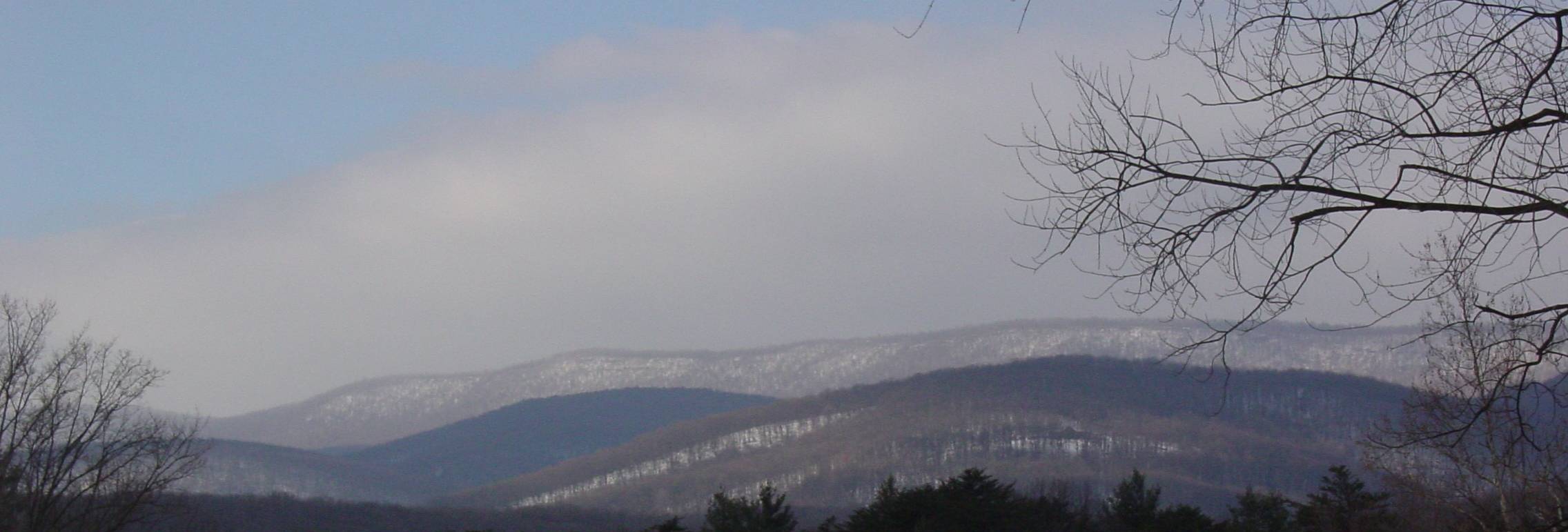
We find the Interior Department photo eerily similar to our own Allegheny Treasures banner (below for your convenience) which is a photo I took of the Allegheny Front above Keyser, WV nearly a year ago, along the very flyway Dr. Spiggle discusses in his letter.

Interesting that both Secretary Salazar’s “natural world” photo and my “natural world” photo have one thing in common … neither includes wind turbines.

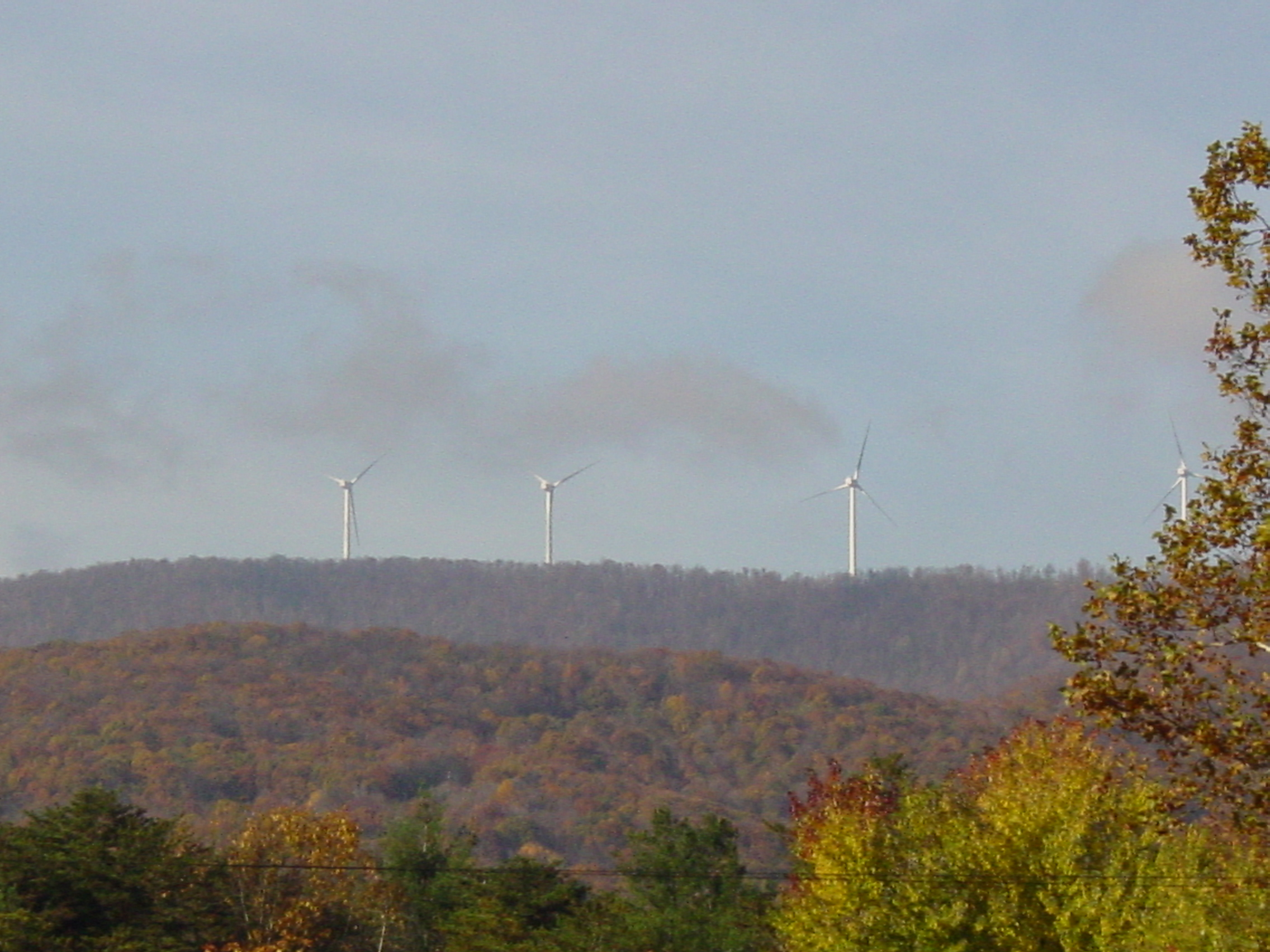
Now compare our Allegheny Front banner photo of last year to the photo I took this morning of the very same Allegheny Front ridge-line, which is now home to 23 massive Japanese wind turbines standing tall on their Mexican made columns.

As you can see, Secretary Salazar’s vigorous promotion of industrial wind will, in reality, do little to preserve the beauty of the landscape.  Unfortunately, the Secretary’s misguided efforts to support this energy impostor is more likely result in this sad scenario:

(Courtesy of Windtoons)

We thank Dr. Spiggle for allowing us to post his letter to the Secretary.

Posted in Allegheny Mountains, Appalachian Mountains, Wayne C. Spiggle, West Virginia Wind | Tagged , , , , , , , , , , , , | Leave a comment

Another green job success story … for Finland.

Oops there’s goes another half-billion, kerplop! Kerplop!

I love that Frank Sinatra tune!

According to ABC News, “With the approval of the Obama administration, an electric car company that received a $529 million federal government loan guarantee is assembling its first line of cars in Finland, saying it could not find a facility in the United States capable of doing the work.”  (Video in link.)

The article noted that ex Dallas Cowboy Solyndra cheerleader, “Vice President Joseph Biden heralded the Energy Department’s $529 million loan to the start-up electric car company called Fisker as a bright new path to thousands of American manufacturing jobs.”

Alrighty then!  Let’s bring it home with one of my favorite Peter, Paul and Mary tunes, “Where have all the green jobs gone …

Posted in green lunacy | Tagged , , , | Leave a comment

Do GE wind turbines really suck that much?

In a continuing effort to generate American jobs, First Wind has selected Germany based Siemens to supply some 30 massive turbines for the Kawailoa Wind project located on the North Shore of Oahu.

First Wind noted that the Siemens equipment (which is to be placed on US soil) is “both the best technological and economic fit for the project site,” which I might otherwise interpret as … US based GE turbines suck and they’re way too expensive.  But then, that’s why I’m not in sales.

Interestingly enough, according to Market Watch, “the project is scheduled to begin construction in late 2011.”  Probably just a coincidence that the project will then allow First Wind to to belly up to the 1603 Grant bar and suck down several million taxpayer dollars.

Readers might recall that Germany’s Siemens, along with Japan’s Mitsubishi Heavy Industries were selected to supply the turbines for two Duke Energy projects in Texas slated to begin construction by … wait for it … December 2011, coincidentally just in time to belly up to the 1603 Grant bar and suck down several million taxpayer dollars.

We suggested before that you contact your elected officials to ask if they feel comfortable handing your hard-earned tax money to foreign enterprises.  If you haven’t, there’s still time!  You can reach your representative here, and your senators here, and President Obama here.

They love hearing from you!  It’s true … they told me so.

Posted in Industrial wind jobs, Wind Energy Shenanigans, Wind Power subsidies | Tagged , , , , , , | Leave a comment

Taxpayer dollars = wind business profits.

Thanks to Jon Boone for directing us to a stunning article by Paul Chesser, associate fellow for the National Legal and Policy Center and executive director of American Tradition Institute.

In the article, Mr. Chesser points out that, “Duke has been on a wind and solar farm-buying and building spree in order to: capture grants from the Recovery Act; capitalize on states’ incentives and tax credits; collect Department of Energy research and development grants and contracts; and accelerate depreciation on the facilities so as to shield more of its income from taxation.”

The full article is found at this link:  Duke’s Rogers: Wind Subsidies Yield Big Profits

Readers might note that this comes on the heels of our post concerning Duke Energy’s hefty purchase of Japanese and German turbines for its Los Vientos Windpower Project in Willacy County, Texas projects which, coincidentally, are scheduled to begin construction in December of 2011 … just in time to belly up to the 1603 Grant bar and suck down several million taxpayer dollars.

C’mon Duke, at least Jesse had the courtesy to wear a mask!

Related links:

Jon BooneRobert BryceGlenn SchleedeNational Legal and Policy Center, American Tradition Institute.

Also, please take advantage of the many informative links we provide on the Allegheny Treasures home page.

Posted in Glenn Schleede, Jon Boone, Robert Bryce, Wind Energy Shenanigans, Wind Power subsidies | Tagged , , , , , | Leave a comment

Duke Energy buys American! OOPS … scratch that!

Here’s another slap in the face for all you US taxpaying, “buy American – so we have more jobs” folks out there in Neverland:  US based Duke Energy is building two wind plants in US based Texas utilizing 87 massive turbines from Germany based Siemens and 84 massive turbines from Japan based Mitsubishi Heavy Industries.

Oh, by the way, construction is to begin in December of this year just in time for Duke to cash in on the millions currently available under the Federal government’s 1603 Grant, which is, hopefully, to expire at the end of the year.  Oh, in case you’re not aware … the 1603 grant money they’re handing out is yours.  Well, it used to be.

Again, how stupid do the politicians think we taxpayers are?  Don’t bother to answer.

Again, when will this nonsense stop?  When we replace the current crop of self-serving politicians with individuals truly dedicated to protecting our interests.

Maybe you could ask yours if they feel comfortable handing your hard-earned tax money to foreign enterprises.  You can reach your representative here, and your senators here, and President Obama here.

When they tell you it’s for your own good, suggest that, since it’s your money, you would prefer to make the choice.

Go ahead … contact them.  It’ll be fun.

Posted in Wind Energy Legislation, Wind Energy Shenanigans, Wind Power subsidies | Tagged , , , , | 2 Comments

Sure, wind turbines make people sick … but not all that many. Wait … What?

The Canadian Wind Energy Association just opened the “health impact” door.  One might wonder now if the American Wind Energy Association will now be forced to walk through it?

Wind Concerns Ontario – News Release

October 17/2011-In a dramatic reversal of its long-held position on the risks to human health of industrial wind turbines, the Canadian Wind Energy Association affirmed late last week through a public statement on their website that some number of people will become sick due to industrial wind developments. CanWEA stated that “a small percentage” of those living next to industrial wind developments will become sick.

“The majority of Walkerton residents did not become sick due to tainted water. The majority of Ontario school children are not allergic to peanuts. However, in both cases the Ontario Government has taken swift action to protect human health” commented Wind Concerns Ontario Chair, Ian Hanna.

CanWEA’s recent statements suggest that some level of harm to human health, or collateral damage, resulting from industrial wind developments is acceptable.

“Given this sudden change acknowledging harm to human health caused by industrial wind turbines, CanWEA owes the people of Ontario a straight answer”, added Hanna. He then asked, “How many sick people are too many? How many Ontario families need to suffer before it’s time to support full independent studies into the impacts of utility scale wind turbines on human health?”

Posted in Industrial Wind Health Issues, Wind Concerns Ontario | Tagged , , , , | Leave a comment

Green Jobs?

Thanks to John Terry for pointing us to this informative interview with the “Green Jobs Answer Man.”

——————–

——————–

Posted in green lunacy, Robert Bryce | Tagged , , , | Leave a comment

“Gas will be the world’s dominant fuel for most of the next century.”

Take a moment to read an interesting commentary by the UK’s Matt Ridley, aka “The Rational Optimist” – Gas against Wind.

Posted in natural gas | Tagged , , , , , | Leave a comment